
By Dr. Selwyn R. Cudjoe
July 23, 2008
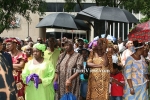 Most of us will revel in African sartorial splendor during the next week. Such displays signal a magnificent achievement of which the Emancipation Support Committee (ESC) should be proud. It has made African Trinbagonians aware of their heritage and, at least for a week, makes us reflect on the land of our origin. As we reflect, it is well to ponder how this awareness coincides with our threatened re-enslavement in our adopted land.
Continue reading Emancipation and Self-Reflection
 CRY wolf, the adage goes, and you may just get your wish when you least expect it. I am reminded of the story of the little shepherd boy every time I read or hear someone say that Prime Minister Patrick Manning has morphed into a Mugabe. Are these people for real? I ask myself: do they really understand what a murderous, mindless dictator is, what he is capable of subjecting his country and people to?
 T&T’s Press is so intent on demonizing Patrick Manning that sometimes it seems incapable of carrying a balanced story about any event that concerns him. Anyone who did not attend PNM’s 42nd Convention could not have hoped to get a balanced account of what transpired there last weekend if they only read accounts of same in the press. But as one poet suggested, none is so blind as he who would not to see.
 As if this country is not burdened by more than its fair share of woes, I don’t know if I should laugh or cry over expressions of outrage by those who see the sky caving in on Trinidad and Tobago because government postponed Local Government elections for the third time. What, pray, is the big fuss over staging local elections? The municipalities and corporations continue to exist-note I did not say function-as they always have, elections or no elections. In other words, they did nothing to benefit citizens during their official tenure. And they continue to do nothing as they await reforms promised by the Government since 2002.
 I just had to comment on last Sunday’s Express article by Ms Sheila Rampersad in which she expressed her great disappointment over Education Minister Esther Le Gendre’s attack on Mickela Panday in Parliament.
 The following headline was blazoned across the July issue of The Anglican Outlook: “Hundreds say Farewell, Canon Griffith,” the former pastor of St. Clement’s Anglican Church. The photograph that accompanied the story showed his colleagues carrying his casket to its final resting place. Bishop Calvin Best presided at the Holy Eucharist while Lystra Bernice Griffith Brown, the canon’s daughter, delivered the eulogy.
 I was in employment in the Public Service during the period when the meritocracy factor slowly and surreptitiously began to assert itself as the preferred alternative criterion to seniority as the determining consideration to effect promotions. This development constituted as an aspect of Performance Management in Public Service Reform.
  T&T is not a failed state; it is a state whose socio/economic policies, ineffective leadership and lack of vision is failing its citizens. It is a state which has consistently failed to effectively integrate large sections of the African and East Indian populations into the wealth creating mechanism that would give them a stake in the country. This failure manifests itself in misdirected values, social deviance, questionable morals and increasing violence. Consequently, with the exception of the elite, a struggling middle class and an increasing number of foreigners, the great majority of citizens in this small but oil rich nation remain poor; marginally more than hewers of wood and drawers of water.