
By Raffique Shah
September 21, 2008
Trinidad and Tobago News Blog
www.trinidadandtobagonews.com/blog
 IT was a desperate cry from an exasperated woman, and it tugged at my heart when we finally spoke on the phone. She made me feel ashamed of myself, since, like so many others, I, too, am a victim of the jarring, amplified noise that passes for music in too many private motor vehicles. As a columnist who is often the voice of victims who have few options to vent their suffering, I failed to write about this growing menace of noise pollution.
Continue reading Mobile Menace
 Im sorry to say that I think that John McCain is going to be the next president of the United States. After the long night of Bush horror any Democrat should easily win, but the Dems are screwing it up and McCain has been running more-or-less even with Barack Obama in the polls. The Democrats should run on the slogan “If you liked Bush, you’ll love McCain”, but that would be too outspoken, too direct for the spineless Nancy Pelosi and her spineless party. Or, “If you liked Iraq, you’ll love Iran.” But the Democrat leadership is not on record as categorically opposing either conflict.
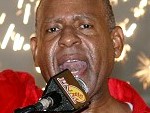 In the face of the unforgivable, non-public disclosure of the text of the August 14 MOU as well as the disrespectful-to-the- people silence on the obligation to outline the compelling economic, political and trade considerations that underpin and drive the urgency of PM Manning’s proposed political union with three OECS countries there has arisen, quite understandably a range of informed speculation on what really motivates the mind of Manning. Many believe that personal (hubris) and subjective (legacy) considerations dominate, determine and drive his political union initiative.
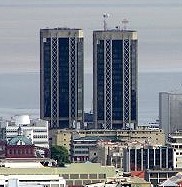 EDITOR: I sometimes wonder if my information sources of media, internet etc. are defective. My information suggests that most of the developed economies in the world are in deep crisis, major US corporations e.g. Bears and Sterns, Fannie Mae and Freddie Mac, Lehman Bros. etc had to be bailed out by the Federal Authorities. (They are baulking at bailing out Lehman Bros.). The housing market is at its lowest point in decades and unemployment is at its highest in many years. The UK and Canada are awaiting statistical confirmation that their economies are in recession but their populations know full well.
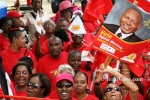 President of the Law Association, Senior Counsel Martin Daly, yesterday criticised Prime Minister Patrick Manning’s participation in a ‘march’ last Friday at Woodford Square, Port of Spain.
  Sarah Palin, it seems, is about to topple the Presidential apple cart. My friend Louis Lee Sing (we were in Chicago to look at the T&T vs. USA soccer match) is afraid. “Selwyn,” he says, “it seems as though Palin might do it.” It’s all about the best made plans of mice and men and thunder striking from afar. Here, in Chicago, the home of Obama, there is cautious optimism. In Boston where I teach, there is tentativeness about how to interpret Palin’s candidacy; and in New York where I visited the last weekend to take my daughter to dinner for her birthday signs of apprehension abound.