
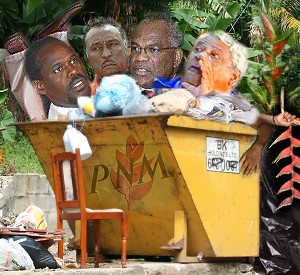
Valley accuses Manning of bias
Diego Martin Central MP Ken Valley, in a strongly-worded letter to his political leader Prime Minister Patrick Manning, has called on the PM to accept his endorsement by PNM’s screening committee and stop imposing his bias against his selection as the party’s candidate for the seat in the November 5 general election…
Browne gets the nod for Diego Martin Central
Valley: I don’t feel hurt
THE ruling PNM presents its election candidate team today in a slate which has “cut” party deputy leader Kenneth Valley out as Diego Martin Central candidate and replaced him with Dr Amery Browne…
Last rites for Valley
PM sticks to his guns
‘I leave in grace, not disgrace’
Outgoing Laventille East/ Morvant MP Fitzgerald Hinds comforted tearful supporters whom he urged to stay loyal to the PNM despite his non-selection to contest the seat in the upcoming General Election.
 The election race is on and understandably some politicians will get carried away with the moment. What is not understandable or acceptable is the verbal abuse of citizens as demonstrated by the Congress of the People’s Ganga Singh.
 On the heels of Flow cable announcing increased internet speeds for lower rates we have TSTT launching Blinkbroadband (
 TSTT’s dial-up and high-speed internet service was down for several hours yesterday, October 01, 2007, into late last night. We are unable to ascertain if this disruption was island wide.
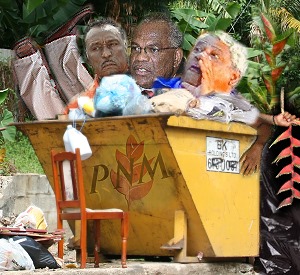 Diego Martin Central Mp Ken Valley has been rejected as a candidate by the PNM Screening Committee.
 Last week, looking at a television clip of two jokers from Laventille hugging and dancing with UNC officials, celebrating the “strengthening” of Basdeo Panday’s new alliance to fight the PNM, I was almost reduced to tears. A few nights before that sorry sight, Bas was on a platform begging Winston Dookeran to join forces with the fast-fading UNC in order to defeat the ruling PNM at elections which should be called sometime before mid-December. Matters not how he couched this umpteenth attempt to woo back Winston, it was undisguised political vagrancy.