
TriniView.com Reporters
Event Date: July 27, 2007
The Emancipation Support Committee (E.S.C.) launched the 2007 Emancipation celebrations on Friday night, 27th July, at the Lidj Yasu Omawale Emancipation Village located at Jean Pierre Complex. The theme of this year’s celebration is “Remember the Middle Passage; Act to Repair the Damage”. According to a release from the E.S.C., “We remember and honour the ancestors for their heroic acts of rebellion and resistance against this inhumane and uncivilized practice of trafficking in human beings, while raising awareness about the enduring impact of slavery and the slave trade on Africa and Africans across the Diaspora.”
Continue reading E.S.C.’s 2007 Emancipation Launch
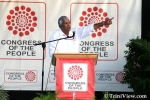 Congress of the People (COP) political leader Winston Dookeran urged residents of Laventille and Morvant to “rise beyond the narrow politics of the past” and usher in a COP regime at the next General Election.
 Prime Minister Patrick Manning has spoken of the deleterious effects gambling has on individuals, families and ultimately the society as a whole. Like him, I have heard some chilling stories about casino gambling. If the PM was astounded by the amounts of money his friends throw away at crap (or whatever) tables at these establishments, he’d be horrified to learn that some people are so addicted to gambling that they sometimes spend sleepless days and nights trying to beat “the house”. Worse, casinos are not averse to ensnaring such fools in debt traps that could ultimately lead to strong-arm measures to recover what is owed, or to gamblers losing their worldly possessions as a result of their greed.
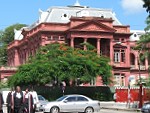 ‘It means that former MPs, such as Ralph Maraj and Ramesh Lawrence Maharaj, would receive, at age 55, a gratuity of 10 percent of their gross salary.’
 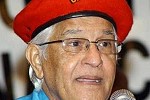 I need to get in touch with the person who coined the adage, “Those whom the Gods wish to destroy, they first make mad.” I think he or she should add “or clowns” at the end of it. How else does one explain Basdeo Panday’s puerile behaviour, his donning of a beret that would otherwise look chic on fashionable women or neat on a soldier’s head, but more like a clown cap on his? Can anyone in the UNC explain this eccentric side of a man who was once prime minister of this country, and whom some political analysts insist remains the “only genuine politician in the country”? I think Bas, his platform colleagues, and those pseudo-analysts need to have their heads examined.
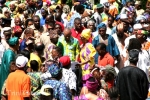 One of the most perplexing, disturbing and still yet unresolved perennial reality-check dilemmas that afflict Afrikan-Trinbagonians is their supremely blurred vision to clearly ascertain the intrinsic, historical differences between emancipation versus liberation.
 Succumbing to criticisms from corporate sponsors and the general public, an emotional Choc’late Allen broke down during yesterday’s Youth Motivational Awards.
 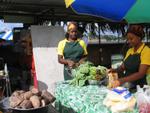 We have the land space and know-how to grow most, if not all, the vegetables we consume. This is one component of food production where we can consider exporting the surplus. Since tourism is the backbone of the economies of many Caribbean countries, and given that most of the islands are capable of producing quality vegetables at competitive prices, regional governments should insist that hotels and restaurants that benefit from generous tax concessions must link a local vegetables-and-fruits component to any such benefits. Hoteliers may point to certain negative farming practices, the unreliability of supply and quality as reasons for importing these items.
 The Hindu American Foundation (HAF) has listed Trinidad and Tobago among ten countries in the world which abuse Hindus’ human rights in its third annual Hindu human rights report for 2006 published on Wednesday.