By Stephen Gowans
December 08, 2008
gowans.wordpress.com
 The crisis in Zimbabwe has intensified. Inflation is incalculably high. The central bank limits – to an inadequate level – the amount of money Zimbabweans can withdraw from their bank accounts daily. Unarmed soldiers riot, their guns kept under lock and key, to prevent an armed uprising. Hospital staff fail to show up for work. The water authority is short of chemicals to purify drinking water. Cholera, easily prevented and cured under normal circumstances, has broken out, leading the government to declare a humanitarian emergency.
Continue reading Cholera Outbreak Outcome of West’s War on Zimbabwe
 Many people agree that this country is in serious crisis. However, I find that many of these perspectives on the state of Trinidad and Tobago rarely touch on the roots of the issues, especially as they fail to recognize that many of the problems we face are built into the very fabric of Caribbean and Trinbagonian society. Thus, addressing these problems calls for a fundamental questioning of the origins and evolution of our society.
 I can’t claim to have known anything about Consumer Affairs Minister Peter Taylor until two weeks when he singled out “doubles” as a target for price reduction. That statement signalled to me that the minister was doubly ignorant about his portfolio, maybe even wholly unsuited for the job. Indeed, Prime Minister Patrick Manning, who will read this column from a hospital bed in Havana, may want to consider doubling up on ministers in this ministry by naming a Junior Minister of Doubles.
 MINISTER of Planning, Dr Emily Gaynor Dick-Forde, said over $40 million was paid in commissions to the agents who arranged financing of the Waterfront Project, replying to a question by UNC Senator Mohammed Faisal Rahman in the Senate on Tuesday.
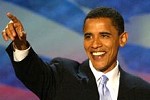 Now that a Black man has been duly elected as the 44th President of the United States of America, it is a sine qua non that all Americans should be a bit more cautious and sensitive when apply the label Black to situations, instances and events that occur in every day life.
 EVEN as India’s elite military units were flushing out the remnants of the terrorists who launched a bloody, well-coordinated attack on several symbolic targets in Mumbai, the blame-game was underway. Predictably, Gujarat’s Chief Minister, Narendra Modi, openly accused Pakistan of being behind the attacks. Prime Minister Manmohan Singh was more diplomatic in his comments, as was his Foreign Minister. What is clear, though, is following this multi-pronged assault on that country’s commercial capital, war between India and Pakistan is a strong possibility.
 The Tobacco Bill now being debated in Parliament seems to be a case of using a shotgun to kill a mosquito. And, as with a shotgun, there is the danger of injuring innocent bystanders while the mosquito flies free.
 So we have come full circle-responding only when the White “massa”, or “missus” in this case, wields the whip. Government has belatedly decided to review its expenditure in light of the global financial and economic crises. The announcement to that effect came immediately after the IMF’s Christina Daseking warned government about its spending spree, saying it must rein in unnecessary expenditure if the country is to weather the global storm.