
By Dr. Kwame Nantambu
January 20, 2009
Updated: January 21, 2009
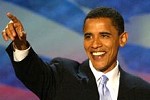 For the past five hundred years, the world has been under the sway of what Dr. Ivan Van Sertima has called the “five hundred year curtain.”
This European foreign policy curtain has manifested itself in the 1655 Britain’s global master-plan/code-word under the rubric of the “Great Western Design” as enunciated by Oliver Cromwell.
Continue reading Geo-political aspects of Obama’s presidency
 IF ever the world needed an economic recession, this is the time. Maybe there is some superior entity that is both omniscient and omnipotent, that saw the excesses man was capable of, left to his devices. And just maybe, that entity decided to call halt to the madness that gripped mankind, from Iceland to Antarctica. Almost the entire world, except for the one billion living in poverty that we can pretend do not exist, engaged in wanton, wasteful consumerism. It was as if we were re-enacting the lavishness of the pharaohs of ancient Egypt, or the Court of the Roman Empire in its halcyon days.
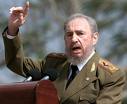 On 1st January 1959, a successful armed revolution took place in the Caribbean. This revolution destroyed Euro-Spanish-American colonial oppression in Cuba. It was led by Fidel Castro, Raul Castro and Ernesto “Che” Guevara. The Euro-Spanish-American dictatorship regime was led by Fulgencio Batista.

 The recent call by leaders of both the Congress of the People (COP) and UNC-A for a co-operative accommodation/dialogue with the ruling PNM government to tackle the thorny, intractable crime problem in TnT will always remain a classic exercise in futility.
 PREDICTABLY, Time magazine named US President-elect Barack Obama as its “Individual of the Year, 2008”. Obama would undoubtedly emerge as “the Man” for publications and institutions that usually bestow such annual honours. In fact, for most people across the world, Obama is the Man of the Century, matters not that we are a mere eight tumultuous years into an era that is as unpredictable as Obama’s stature is predictable.