
By Raffique Shah
March 02, 2008
 ONE week spent in Jamaica is far too little time to assess the state of the country or to enjoy its many scenic and special attractions. Most of the latter are way up the mountains or beyond, on its tourist-oriented north coast. Kingston itself is a city of stark contrasts. Like most of its sister cities in the region, it has enclaves that exude wealth-colonial bungalows set on over-sized, manicured plots, with newer, impressive mansions perched on hillsides surrounding the city.
Continue reading One Caribbean, one love
 South Africa has come face to face with its apartheid past when a “shocking” video emerged of white university students force-feeding and racially humiliating five poor black cleaners.
 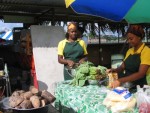 Esme Choonara looks at protests and riots as market madness threatens world’s poor
 EDITOR: It has long been known, that our greatest resources have been given to big business or prominent men from all over the world, especially the United States. However, this didn’t hit home until I was looking up Oil Fields to see who own them. And, under the United States I found Tobago listed as “In Development.” It is amazing to see and hear of corrupt people at home, but I am disgusted by these people and can’t hold back any longer. Our natural resources belong to the people of Trinidad and Tobago, and not to outsiders. Why should the people of Trinidad & Tobago get the smaller percentage?
 ABOUT two weeks ago, a downright dangerous incident occurred offshore Claxton Bay, not far from where I live. Peter Vine, a UWI lecturer and environmental activist, was among a group of fishermen and nearby residents, protesting preliminary works being conducted by agents of the NEC in preparation for the reclamation of some 255 hectares of coastal land for the establishment of an industrial port.
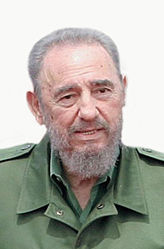 Revered maximum leader Fidel Castro has decided to demit office as President and Commander-in-Chief of Communist Cuba due to ill health.
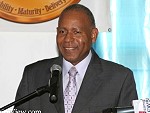 In the build up to Wednesday’s meeting with newly elected PM Thompson of Barbados, PM Manning must be briefed comprehensively and clinically on the problems and issues that contributed to the deterioration of T&T/Barbados bilateral relations during the regime of former Prime Minister Owen Arthur. He must work assiduously to pre-empt similar mistakes from recurring during the Thompson watch and to frame the development of our future relations in a mutually beneficial manner.
 A German woman became pregnant after having anonymous sex with six different men who bid on the erotic encounter in an online auction. Now a Stuttgart court has ruled that she has a right to know the men’s identities, despite the Web site’s assurances that their personal data would be kept private.