
By Raffique Shah
January 17, 2026
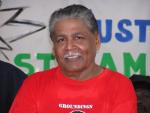 The first time I intervened in Tobago’s politics was in their first Tobago House of Assembly election in 1980. In my innocence, I thought it was a harmless gesture that should have offended no one. This was the latest attempt at constitutional change that should have given the island a greater degree of autonomy, much like self-government.
In the earlier 1976 general election for Trinidad and Tobago, we had reached an agreement of sorts with ANR Robinson’s Democratic Action Congress (DAC) to not contest the two Tobago seats. However, we felt it was necessary that we have a presence in the sister isle.
So, the United Labour Front’s (ULF’s) new star-child on the electoral scene nominated candidates for most of the Trinidad seats but we did not touch Tobago. We thought we would leave Tobago for “Robbie”, who proved his strength on the sister island after he had resigned as deputy leader of the PNM in the aftermath of the 1970 Black Power Revolution.
I should add that in the DAC, some stalwarts had persuaded Robinson to run against us and the PNM, hence weakening both parties. Only PNM prospered.
I thought I should explain some of the politics of that era to enable those who knew nothing of it to garner knowledge that would help them understand the politics of Tobago and Trinidad. That was wishful thinking.
Greed fuels man’s grab for power wherever it may present itself. Since the ULF was the new kid on the block, we were asked to give up seats we thought we could win. While the greedy strutted around the campaign trail, I had applied my military knowledge and training.
I told the executive we seemed set to win ten seats and possibly another two to four if we worked hard enough and if the PNM made mistakes.
Most of the lead people in our party bought my theory, but those who thought I was a mere mutineer stood by lazily, enjoying the fruits of the labour of those who cared about country and people.
All of this happened as Dr Williams dodged the magic bullet and kept a firm hand on power that seemed to be the oxygen of his existence. Thrice did the PNM face imminent defeat and thrice did the fractured, greedy opposition fail to move him.
Karl Hudson-Phillips’ Organisation for National Reconstruction (ONR) menaced the PNM in 1981 where he polled votes that should have seen him win the election. That was not to be.
Unfortunately for Karl, Dr Williams died in 1981 and saved the PNM from defeat. His successor, George Chambers, campaigned on the chorus, “Not a damn seat for dem!”Although Karl’s ONR polled large numbers of votes in the seats they contested, “Not a damn seat” was their destiny.
Now I recall all of this in the wake of the PNM being ousted from the THA altogether in Tobago in the recent Assembly election. It is not the PNM’s loss or their total removal from office that must concern its leaders and members—and, I should add, its enemies.
Tobago’s politics is a different ball game. In the first THA election when Paul Harrison, Ramesh Lutchmedial and I arrived in Tobago on the Sunday, we had to hire a taxi and track down Robinson—who happened to be, at that point, in Roxborough, if my memory serves me correctly.
We hustled to catch up with Robbie. Our taxi parked on a small incline that overlooked the meeting. People recognised me and that I had company, and they smiled and were warm to my greetings, but nearer the stage they did not know who it was.
Some party strong-arm supporters turned in our direction and prepared to attack us. We kept walking.
One of the heavyweights removed his watch as he approached—that was a universal signal for war, and just as the mood was about to break into who knows what, I heard Robbie say into the mic, “That is brother Shah. Allow him to come forward.”
The once-menacing faces then turned into joyful expressions.
What that little episode revealed was that in Tobago, campaigning could mean physically fighting, and one must be prepared for such episodes.
On my next trip to Tobago during a THA election campaign I sensed a level of hostility that was uncomfortable. Such acts of belligerence are commonplace over in the sister isle but do not occur here at home.
We must bear that in mind as we proceed to cut or release the ties between the two islands and their people. I think now is the time to move with haste to sever the ties that once bound us as a people and citizens of the same country. Clearly to Tobagonians, their island is more important than their country. So be it…