
By Nalinee Seelal, newsday.co.tt
January 31 2007
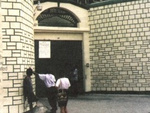 An elderly couple was beaten to death at their Cascade home yesterday by bandits who escaped with an iron safe, leaving behind two infant children crawling in the blood of their murdered grandparents.
The badly beaten body of retired Neal and Massy auto manager, Clyde Commissiong, 69, and his 70-year-old wife, Denise, were found covered in blood in two separate areas of their home on Riverside Road, Cascade. The discovery was made by their daughter Simone, around midday yesterday.
Continue reading Grandparents bludgeoned to death
 It is a universally accepted truism that Trinbagonians are the world’s perfect copycats of the modus vivendi of another foreign country. It is also a universally accepted truism that Trinbagonians copy the absolute worst aspects of daily life and values of that alien culture.
 The recent slaughter of four individuals in Morvant including a police officer and the horrific exposure to the atrocity by a young child, is a startling reminder that few are safe from harms way in our present-day society.
  The comical though heavy-handed manner in which the police handled the Inshan Ishmael issue makes one want to laugh till you cry. Here’s a man who decided to mount a crusade against the evils that bedevil the society. In the still of the night, on the eve of his planned shutdown of the country, tonnes (yeah, tonnes!) of cops swoop down on his home and drag him away from his family much the way kidnappers do. They cart him off to Police HQ, hold him for most of the day. They then charge him with publishing a pamphlet without identifying the publisher-one of the most trivial, archaic laws in our statute books!
 Self styled and pathological struggler, Mr. Basdeo Panday who enjoys the unique distinction of having mashed up each and every recent experiment in electoral-based accommodation is again erecting another ego-centric unity platform carded for 25 January. As usual, unity, whatever that means is to be found in the mind of Panday, must be crafted under his skewed leadership and on his egocentric driven terms and conditions.
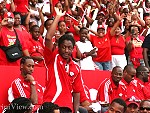 It has been approximately just over seven months since the Trinidad and Tobago Soca Warriors graced the world football stage in the 2006 edition of the World Cup finals. The 10th of June 2006 was an important date for the country as the first time experience of being in the World Cup filled every Trinbagonian’s veins with immense, nationalistic pride. The Road to Germany experience for players, supporters and country was an event not easily forgotten, and always remembered. It is a pity, however, that the value of this experience, its significance and importance is diminished in the absence of any institutional and national framework to develop far reaching sporting programmes that will nurture football and other sporting talent.